WHY THIS CLASSIC
为什么入选
《雷雨》以高度集中的时间和空间推动冲突,人物常在说一件事时回避另一件事。它是学习戏剧结构、舞台提示与潜台词的代表文本。
Thunderstorm concentrates conflict in time and space. Characters often speak about one matter while avoiding another, making the play exemplary for structure, stage direction, and subtext.
READING CONTEXT
阅读坐标
曹禺在1930年代完成《雷雨》,作品标志着中国现代话剧的重要成熟。故事把两代人的秘密与冲突压缩在一个家庭空间和短时间内展开。
Cao Yu completed Thunderstorm in the 1930s, and the work became a major marker in the maturation of modern Chinese spoken drama. Secrets and conflicts across two generations are compressed into one household and a short span of time.
BILINGUAL CLOSE READING
雷雨到来之前
Before the storm breaks
编辑说明
以下为 Hanyu365 原创教学场景改写,使用作品的公共人物关系与戏剧技法作分析示范;不复制任何原剧台词或既有英译。
This original Hanyu365 teaching scene uses public character relationships and dramatic techniques for study. It reproduces no original dialogue or existing translation.
中文 · 01
闷热先进入房间
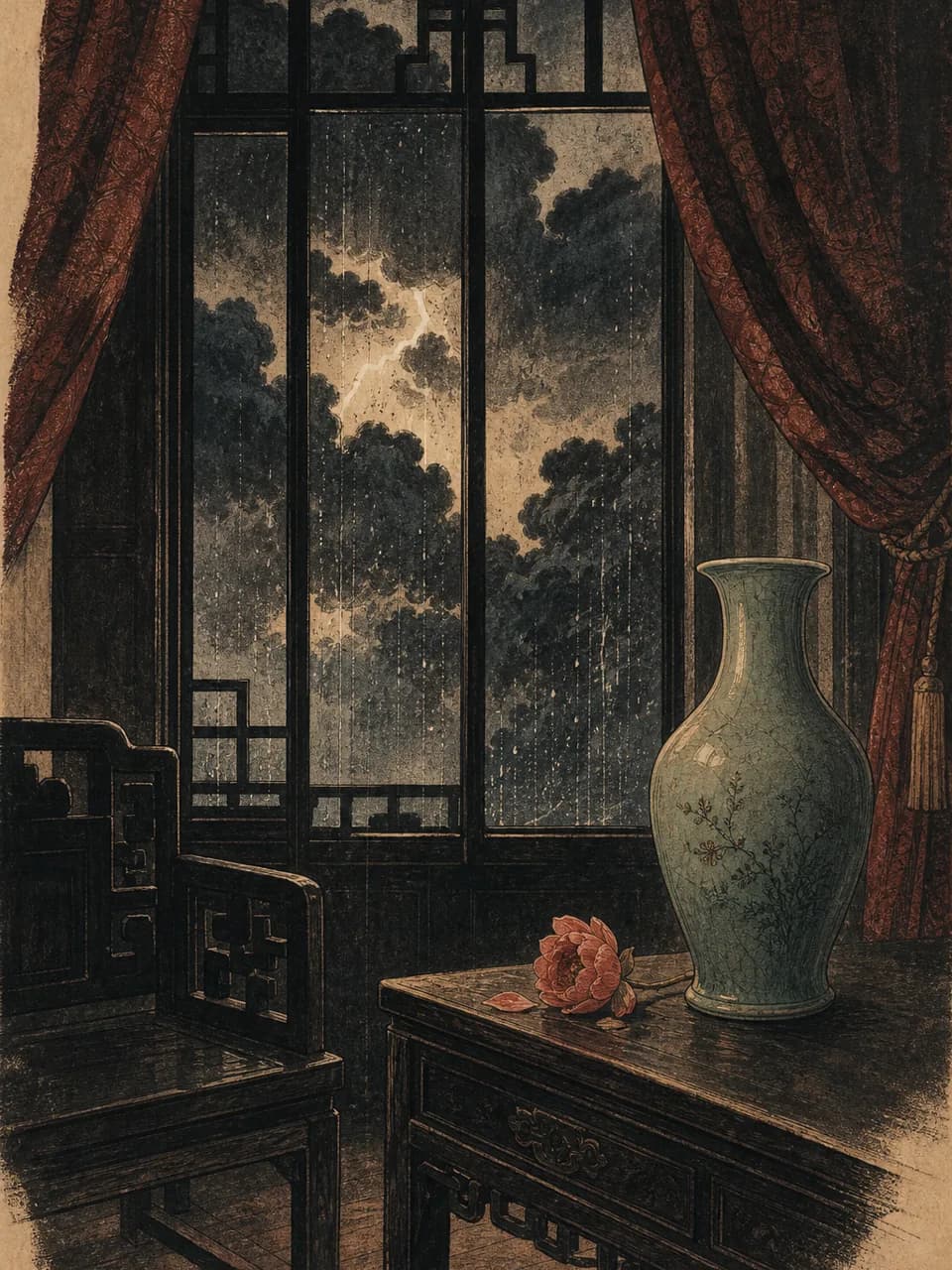
窗户紧闭,空气像停在屋里,远处云层不断压低。繁漪几次望向窗外,其他人却仍用平稳语气谈论家中的日常安排,仿佛只要维持原来的话题,风暴就不会靠近。这个教学改写让天气先于冲突进入房间:闷热使人的呼吸、停顿和目光都变得敏感,也把不能明说的紧张变成身体能够感到的压力。越是没有人主动谈天气,天气越像一句被共同回避的话。观众因此在秘密揭开之前,已经从空间的不舒适中预感到,表面的秩序无法长久维持。
写法提示:环境与人物心理平行推进,使舞台气氛先于冲突升级。
English · 01
Heat enters first
The windows are tightly closed, the air seems trapped inside the room, and distant clouds continue to lower. Fanyi looks outside several times, while the others discuss ordinary household arrangements in controlled voices, as if preserving the old topic could keep the storm from approaching. This original teaching adaptation allows weather to enter the room before open conflict does. The heat makes breathing, pauses, and exchanged glances more sensitive, turning tension that cannot be spoken into pressure the body can feel. The less anyone willingly mentions the weather, the more it resembles a sentence the entire family has agreed to avoid. Long before secrets are disclosed, the audience can therefore sense through physical discomfort that the orderly surface cannot be maintained indefinitely.
Craft note: Environment and psychology advance together, allowing atmosphere to rise before open conflict.
中文 · 02
称呼划出距离
同一个人在不同人口中拥有不同称呼:有人叫他父亲,有人称他主人,也有人必须以丈夫相待。称呼表面只是礼貌形式,实际上把亲近程度、家庭角色和权力距离同时写进一句话。一个词说得过于生硬,可能暴露疏离;说得过于亲近,又可能越过不被允许的边界。人物开口之前,已经在选择自己能站的位置。这个教学改写把注意力放在称呼的细微变化上,因为戏剧冲突不总靠争吵呈现。有时,一声看似平常的招呼就能提醒观众:谁拥有命令的权力,谁只能服从,谁又在关系中寻找尚未得到的承认。
写法提示:戏剧用称呼代替说明,让关系在语言表面自然显形。
English · 02
Forms of address draw distance
The same person receives different forms of address from different speakers: one calls him father, another must call him master, and another is expected to treat him as husband. A title appears to be a matter of politeness, yet it carries intimacy, family role, and distance from power within a single word. If spoken too stiffly, it may expose estrangement; if spoken too warmly, it may cross a boundary the household does not permit. Before a character completes a thought, the chosen form of address has already located that character within the room. This original teaching adaptation attends to such small variations because dramatic conflict does not always require shouting. An ordinary greeting can reveal who has the authority to command, who is expected to obey, and who is still searching for recognition within an unequal relationship.
Craft note: Drama can let relationships surface through address instead of exposition.
中文 · 03
第一声雷之后
远处第一声雷突然截断谈话,屋里没有人立刻接回原来的句子。有人低头,有人看向门口,也有人假装整理手边的东西。这个短暂停顿比直接争吵更有力量,因为观众会在沉默中意识到,每个人都听见了某种不仅属于天气的警告。雷声没有替人物说出秘密,却打乱了他们维持平静的节奏,使那些被压住的话获得出现的机会。这个教学改写把自然声响当作舞台上的第三种语言:台词说的是日常,表情透露不安,而雷声提醒所有人,长期积累的矛盾已经来到无法继续回避的时刻。
写法提示:声音制造公共停顿,让所有人物在同一秒暴露不安。
English · 03
After the first thunder
The first distant thunderclap cuts across the conversation, and no one immediately returns to the interrupted sentence. One person lowers their eyes, another looks toward the door, and someone else pretends to arrange an object close at hand. The brief pause carries more force than open argument because the audience recognizes that everyone has heard a warning that belongs to more than the weather. Thunder does not speak the family’s secrets, but it breaks the rhythm by which calm has been maintained and creates an opening for suppressed words. This original teaching adaptation treats natural sound as a third language on stage: dialogue continues to describe ordinary matters, expressions reveal unease, and thunder tells everyone that long-accumulated conflict has reached the moment when avoidance can no longer hold.
Craft note: Sound creates a shared pause in which every character’s unease becomes visible.
中文 · 04
沉默不是没有台词
家庭成员并非不知道问题存在,许多时候,他们只是知道某些话一旦说出,原有关系就无法恢复。于是沉默成为一种策略:强势者用它维持权威,弱势者用它暂时保护自己,旁观者则借它逃避选择。相同的停顿,在不同人物身上拥有不同含义。这个教学改写要求读者不只追踪谁说了什么,也观察谁在关键时刻没有回应、目光转向哪里、动作为何突然变慢。戏剧中的沉默会把解释责任交给观众,使被压抑的内容反而更加响亮。当多个角色共同绕开一个事实,舞台上形成的不是空白,而是一张由恐惧、利益与依赖编织的关系网。
写法提示:区分不同人物的沉默动机,让停顿像台词一样承担冲突信息和人物塑造。
English · 04
Silence is not the absence of dialogue
The members of the household are not entirely unaware of the problem. Often they understand that once certain words are spoken, the old relationships cannot be restored. Silence therefore becomes a strategy. A powerful person uses it to preserve authority, a vulnerable person uses it for temporary protection, and a witness uses it to avoid choosing a side. The same pause carries different meanings for different characters. This original teaching adaptation asks readers to track more than spoken dialogue. We must notice who does not answer at a decisive moment, where a person looks, and why an ordinary action suddenly slows. Silence on stage transfers the work of explanation to the audience, making suppressed content sound louder. When several characters avoid the same fact together, the result is not emptiness but a network woven from fear, interest, and dependence.
Craft note: Distinguishing motives for silence allows pauses to carry conflict and characterization like spoken lines.
中文 · 05
风暴过后没有简单复原
雷雨能够结束闷热,却不能把家庭带回冲突发生以前。秘密一旦显露,人物必须面对的不只是当下震动,还有多年选择累积的后果。戏剧因此拒绝一种轻松想象:仿佛只要真相被说出,一切就会自动得到解决。真相可以打破虚假秩序,也可能同时伤害已经被秩序束缚的人。这个教学改写把“风暴”理解为揭露与代价并存的时刻。读者需要继续追问,谁早有机会改变却选择拖延,谁承担了并非自己造成的后果,又有哪些关系在诚实之后仍需要漫长修复。雷声提供高潮,责任判断却要在雷声远去以后才真正开始。
写法提示:把高潮之后的后果纳入阅读,可以避免只追逐秘密揭晓,而忽略悲剧中的责任链条。
English · 05
After the storm, there is no simple restoration
A storm can end oppressive heat, but it cannot return the family to the time before conflict occurred. Once secrets are disclosed, the characters must face not only immediate shock but the consequences accumulated through years of decisions. The drama therefore refuses an easy fantasy in which speaking the truth automatically repairs everything. Truth can destroy a false order while also wounding people who have already been trapped within that order. This original teaching adaptation understands the storm as a moment in which revelation and cost arrive together. Readers must continue asking who had earlier opportunities to change and chose delay, who suffers consequences they did not create, and which relationships will still require long repair after honesty becomes possible. Thunder supplies the climax, but the judgment of responsibility truly begins only after its sound has faded.
Craft note: Following consequences beyond the climax prevents revelation from overshadowing the tragedy’s chain of responsibility.
LANGUAGE FOCUS
关键词语
闷热
mēn rè
空气不流通而湿热难受。
oppressively hot and airless
闷热既是天气,也是人物心理压力的外化。
The oppressive heat externalizes the characters’ psychological pressure.
舞台提示
wǔ tái tí shì
剧本中说明动作、环境、语气的文字。
stage directions describing action, setting, or tone
舞台提示决定观众先看见什么、先听见什么。
Stage directions determine what the audience first sees and hears.
压抑
yā yì
情绪受限制,难以表达。
repressed or emotionally constrained
没有说出口的旧事让房间显得压抑。
Unspoken history makes the room feel emotionally constrained.
爆发
bào fā
力量或情绪突然猛烈出现。
a sudden eruption
戏剧把多条矛盾推向同一次爆发。
The play drives multiple conflicts toward one eruption.
DISCUSSION
读后思考
- 01
天气怎样参与了人物冲突,而不只是装饰舞台?
How does the weather participate in conflict rather than merely decorate the stage?
- 02
选择一个称呼,分析其中包含的亲属关系与权力关系。
Choose one form of address and analyze the family and power relations within it.
- 03
如果把故事搬到开阔的室外,戏剧效果会发生什么变化?
How would the drama change if the story took place in an open outdoor space?
SOURCES & EDITIONS
资料与版本说明
- 1. 曹禺
Beijing People’s Art Theatre · 核对 2026-07-24
- 2. 北京人民艺术剧院
Beijing People’s Art Theatre · 核对 2026-07-24
封面为 Hanyu365 原创生成式插画;页面文字由本站编辑性编写。 外部资料用于核对作品背景与版本线索,不代表外部机构为本站内容背书。