WHY THIS CLASSIC
为什么入选
“黛玉进贾府”通过空间移动介绍人物关系,细节密度高而视角稳定,是学习人物描写、环境描写与礼仪语境的经典篇章。
Daiyu’s arrival introduces a web of relationships through movement in space. Its dense details and stable viewpoint make it exemplary for studying character, setting, and social ritual.
READING CONTEXT
阅读坐标
《红楼梦》以贾府及大观园的日常生活为中心,在繁华细节中展开人物情感与家族衰败。前八十回通常归于曹雪芹,后续成书与版本问题复杂。
Dream of the Red Chamber centres on daily life in the Jia household and Grand View Garden, tracing emotion and family decline through luxuriant detail. The first eighty chapters are generally attributed to Cao Xueqin; later textual history is complex.
BILINGUAL CLOSE READING
第一次进入贾府
Entering the Jia household
编辑说明
以下为依据公共领域人物与情境创作的教学改写,侧重观察视角与礼仪语境;不是小说原文或既有英译本。
This original teaching adaptation uses public-domain characters and situations to focus on viewpoint and ritual. It is not the novel’s wording or an existing English translation.
中文 · 01
门第先于人物出现
轿子经过一重又一重门院,仆人按各自负责的范围接力引路,到了某处便停下,再由另一拨人迎接。黛玉还没有认清每一张面孔,已经从门的数量、行走的路线和彼此的称呼中感到这个家族严密的秩序。空间在这里不是静止背景,而像一套无声的礼法:谁能走哪条路,谁在何处等候,都暗示身份和边界。初来者必须一边前进,一边迅速理解这些规则。小说让读者跟随黛玉的目光进入贾府,也让宏大的家族先以细节显出重量。
写法提示:空间不是背景,而是权力关系的第一份说明。
English · 01
The household appears before its people
The sedan passes through gate after gate while groups of attendants guide it only within the areas for which they are responsible. At a certain boundary, one group stops and another receives the visitor. Before Daiyu can recognize every face, the number of gates, the prescribed routes, and the forms of address have already revealed the household’s strict order. Space is not a neutral background here; it operates like a silent code of ritual. Who may take which path and who must wait at which threshold indicate status and limit. A newcomer must move forward while learning these rules at speed. By allowing readers to enter the Jia household through Daiyu’s attentive gaze, the novel gives the great family weight before explaining it, using small spatial details to make an entire social structure visible.
Craft note: Space is not mere backdrop; it is the first explanation of power.
中文 · 02
被看见,也在看
亲友打量这位远道而来的姑娘,观察她的外貌、礼数和反应;与此同时,黛玉也在留心每个人说话的语气、座次和相互关系。她知道自己既是客人,也是被评价的对象,因此常常先观察再开口。这样的谨慎并非无知或怯弱,而是一种快速学习环境的能力。小说把“看”写成双向动作:权势较强的一方用目光判断新人,新人也用目光辨认规则、保护自己。黛玉的敏感由此既带来压力,也成为她理解复杂人情的资源,使人物从入场之初便具有清醒而细密的内在视角。
写法提示:双向目光让人物既显得敏感,也保持观察与行动的主动。
English · 02
Observed, yet observing
Relatives examine the girl who has travelled from afar, noting her appearance, manners, and responses. At the same time, Daiyu studies each person’s tone of voice, place in the room, and relationship to the others. She knows that she is both a guest and an object of evaluation, so she often observes before speaking. This caution is not ignorance or simple timidity; it is a rapid method of learning an unfamiliar environment. The novel makes looking a two-way action. Those with greater authority use their gaze to judge the newcomer, while the newcomer uses hers to identify rules and protect herself. Daiyu’s sensitivity therefore creates pressure but also becomes an intellectual resource. From the moment she enters, the character possesses a clear and finely detailed inner viewpoint through which the household’s complicated human relations can be understood.
Craft note: The two-way gaze makes the character sensitive without making her passive.
中文 · 03
先闻其声
有的人尚未露面,爽朗的笑声和连续的话语已经越过院子,打破众人原有的节奏。读者先听见声音,再等待人物出现,于是出场不再只是“走进房间”,而像一股力量提前抵达。声音透露了说话者的自信,也暗示她在这个家中拥有打破安静、吸引目光的资格。等到外貌和服饰被写出,读者已经带着由听觉形成的期待去理解她。小说通过先声夺人的次序,把人物性格、家庭位置和场面调度结合起来,说明人物塑造并不只靠肖像,也可以靠她怎样改变周围人的注意力。
写法提示:延迟外貌描写,能把普通出场变成具有戏剧性的亮相。
English · 03
A voice before an entrance
Before the figure herself appears, confident laughter and continuous speech travel across the courtyard and break the rhythm of the assembled group. Readers hear the voice first and then wait for the person, so the entrance becomes more than someone walking into a room; it feels as though a force has arrived in advance. The sound reveals assurance and suggests that its owner possesses the social permission to interrupt quiet and gather attention within this household. When clothing and appearance are finally described, readers already interpret them through expectations formed by hearing. By placing voice before sight, the novel joins character, family position, and scene direction in a single entrance. It demonstrates that characterization depends not only on portrait, but also on the way a person reorganizes everyone else’s attention.
Craft note: Delaying visual description turns an ordinary entrance into a dramatic arrival.
中文 · 04
称呼与座次绘出家族地图
初进贾府,黛玉面对的不只是许多陌生面孔,还有一套必须迅速辨认的亲属称谓。谁是长辈,谁掌管日常事务,谁与谁更加亲近,常常不由旁白直接解释,而在称呼、座次、让步和接话的先后中显露。她每叫对一个人、在合适时刻行礼或沉默,便完成一次对家族地图的确认。读者也通过这些细节逐步认识庞大人物网络。小说把信息藏在礼仪之中,使说明不显得生硬;同时也让我们感到,语言并非中性工具。称呼一个人的方式,既表达感情,也承认某种秩序,而新人能否准确使用这些词,关系到她是否被这个家庭顺利接纳。
写法提示:让信息随礼仪动作自然出现,既完成家族说明,也保持初入陌生环境的现场感。
English · 04
Address and seating draw a map of the family
On entering the Jia household, Daiyu confronts more than a large number of unfamiliar faces. She must rapidly understand a complete vocabulary of kinship. Who is senior, who manages daily affairs, and which people are especially close are not always explained by the narrator. These relationships appear through forms of address, seating positions, gestures of deference, and the order in which people answer. Each time Daiyu names someone correctly, performs a courtesy at the proper moment, or chooses not to speak, she confirms another part of the family map. Readers learn the extensive network through the same details. The novel hides information inside ritual, avoiding heavy explanation while showing that language is not neutral. A form of address expresses feeling and recognizes an order; a newcomer’s ability to use such words correctly helps determine whether the household will accept her.
Craft note: Embedding information in ritual explains the family while preserving the immediacy of entering an unfamiliar world.
中文 · 05
繁华场面中的脆弱预感
贾府的门院、服饰、仆从和礼物共同构成令人目不暇接的繁华,但小说并不让这些细节只停留在炫耀财富。秩序越精细,维持它所需的人力、规矩与资源也越庞大;每一次周到安排背后,都可能隐藏压力。黛玉以寄居者的敏感观察一切,使读者在欣赏盛景时仍能感到她的谨慎与孤单。繁华和脆弱因此同时存在:一个看似稳定的大家族,既能给成员庇护,也要求他们准确扮演位置。开篇不急着宣布衰败,而是先把世界写得充盈,让后来出现的裂缝拥有重量。只有见过它怎样辉煌,读者才会理解失去意味着什么。
写法提示:在繁华描写中加入维持成本与寄居视角,为长篇后续的盛衰变化埋下低声伏笔。
English · 05
A sense of fragility within abundance
Gates, clothing, servants, and gifts combine to create an overwhelming impression of abundance, but the novel does not allow these details to remain a simple display of wealth. The more elaborate the order, the more labour, rules, and resources are required to maintain it; pressure may stand behind every graceful arrangement. Daiyu observes everything with the sensitivity of a dependent guest, so readers can admire the spectacle while still feeling her caution and solitude. Abundance and fragility coexist. A great household can shelter its members, yet it also requires each person to perform an assigned position accurately. The opening does not hurry to announce decline. It first makes the world feel full, giving later cracks emotional weight. Readers must see how magnificently the household organizes itself before they can understand what its eventual losses will mean.
Craft note: The cost of maintaining splendour and the guest’s uneasy viewpoint quietly prepare the novel’s later movement from prosperity toward decline.
LANGUAGE FOCUS
关键词语
敛声屏气
liǎn shēng bǐng qì
收住声音,屏住呼吸,形容十分谨慎。
to become very quiet and cautious
周围人敛声屏气,更衬出出场者的气势。
The surrounding silence amplifies the force of the entrance.
打量
dǎ liang
仔细地观察。
to look someone over carefully
黛玉在被打量时,也观察着环境。
Even while being observed, Daiyu studies her surroundings.
门第
mén dì
家族的社会地位与传统。
family status and lineage
门第通过建筑、礼仪和称呼表现出来。
Family status appears through architecture, ritual, and address.
察言观色
chá yán guān sè
观察言语和神情,判断对方心意。
to read words and expressions for social cues
在陌生环境中,黛玉时时察言观色。
In the unfamiliar household, Daiyu constantly reads social cues.
DISCUSSION
读后思考
- 01
贾府的建筑空间如何帮助读者理解家族秩序?
How does the architecture of the Jia household reveal family order?
- 02
黛玉的谨慎是性格弱点,还是适应能力?请结合细节讨论。
Is Daiyu’s caution a weakness or an adaptive strength? Discuss with details.
- 03
“先闻其声,后见其人”为什么比直接描写外貌更有力量?
Why can hearing a character before seeing them be more powerful than immediate visual description?
SOURCES & EDITIONS
资料与版本说明
- 1. Dream of the Red Chamber
Academy of Chinese Studies · 核对 2026-07-24
- 2. Dream of the Red Chamber — open educational edition
University of Minnesota Libraries Publishing · 核对 2026-07-24
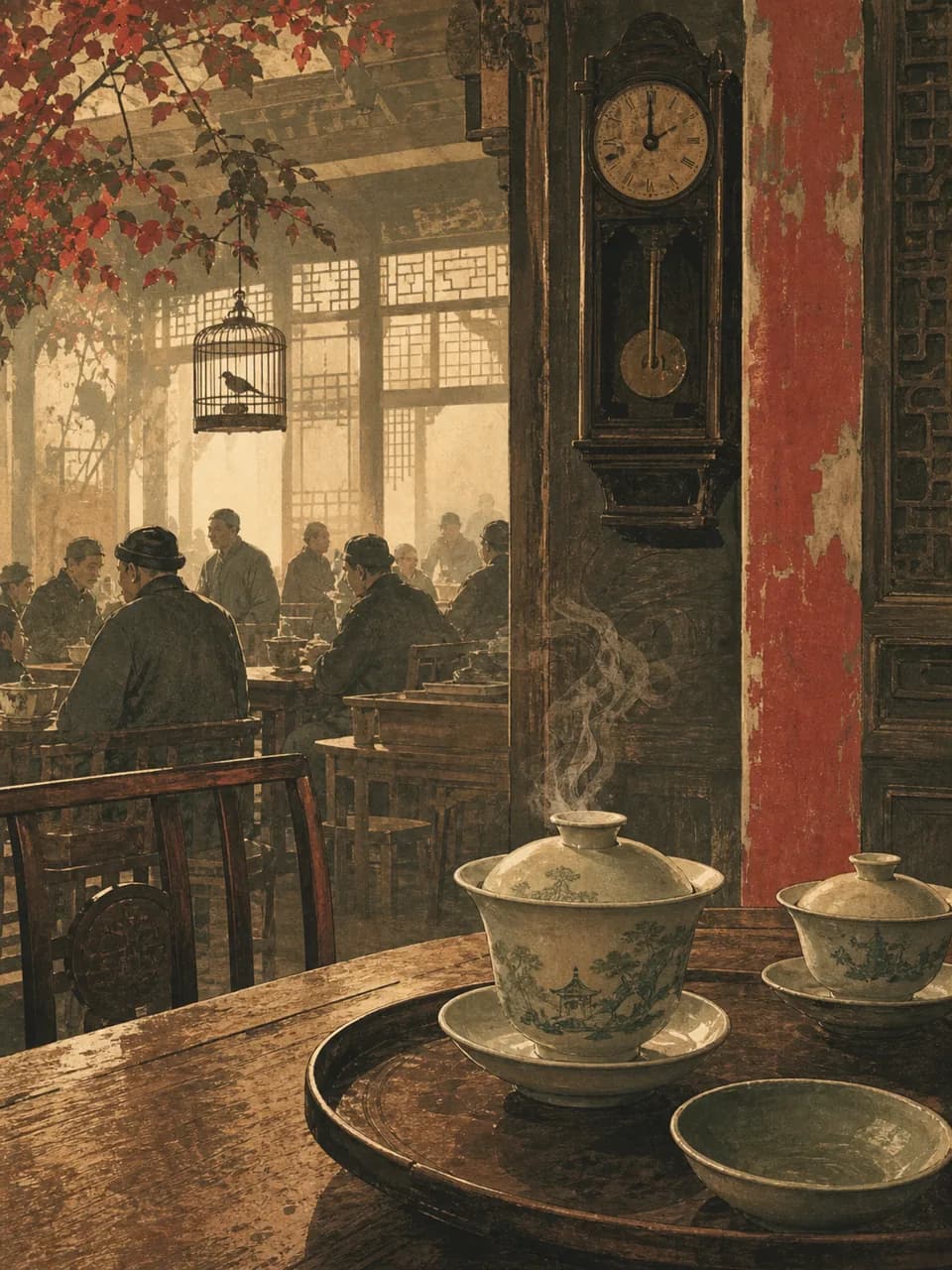
封面为 Hanyu365 原创生成式插画;页面文字由本站编辑性编写。 外部资料用于核对作品背景与版本线索,不代表外部机构为本站内容背书。