WHY THIS CLASSIC
为什么入选
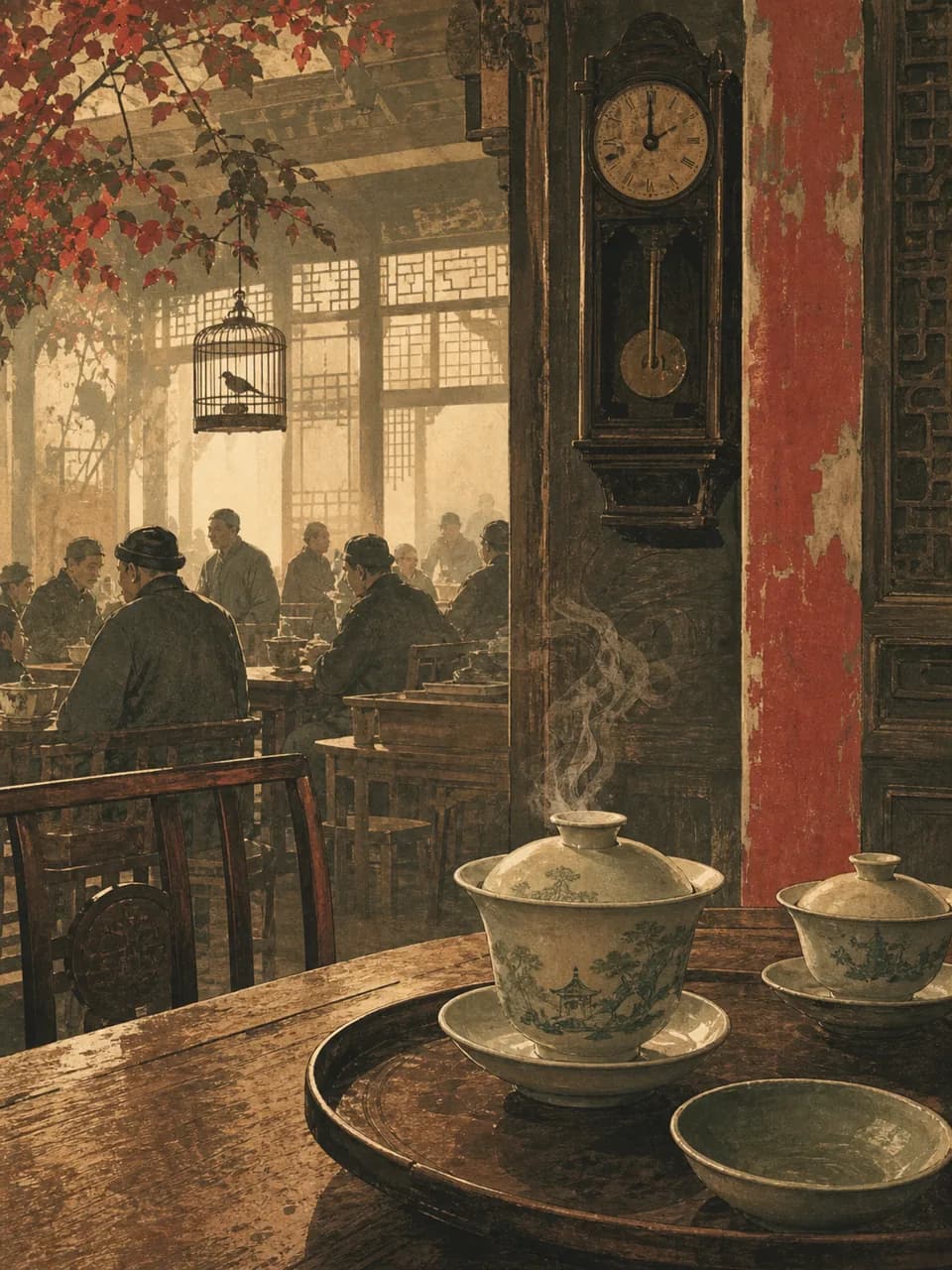
作品以小酒馆作为固定观察点,用称呼、衣着、说话方式和反复出现的笑声塑造人物与环境。它适合学习有限视角、讽刺结构以及“谁在看、谁在说”的叙事问题。
Using a small tavern as a fixed point of observation, the story builds character and social setting through names, clothing, speech, and repeated laughter. It is ideal for studying limited perspective, irony, and the politics of who watches and speaks.
READING CONTEXT
阅读坐标
《孔乙己》写于新文化运动兴起的时期,故事却把镜头放回旧式教育与等级秩序仍然支配日常生活的小镇酒馆。叙述者是店里的年轻伙计,他看见许多,却未必完全理解。
Written as the New Culture Movement was emerging, the story looks back to a small-town tavern still governed by old educational and social hierarchies. The narrator is a young shop assistant who sees a great deal without necessarily understanding it all.
BILINGUAL CLOSE READING
原创教学场景:柜台边的笑声
Original study scene: laughter by the counter
编辑说明
以下三段是本站依据作品结构创作的教学改写,不复制《孔乙己》原句,不提供全文;建议结合权威版本辨认鲁迅原作的语言与讽刺。
The passages below are original teaching adaptations based on the story’s structure. They do not reproduce Lu Xun’s sentences or provide the full text; readers should consult an authoritative edition for the original language and irony.
中文 · 01
柜台划出的界线
酒客站在哪里、穿什么、怎样付钱,都在无声地说明他们在小镇中的位置。有钱有闲的人可以慢慢坐饮,短衣帮则站在柜台外迅速喝完。孔乙己偏偏把两种互不相容的标记带在身上:他穿着象征读书人身份的长衫,却只能像穷困的短工一样站着喝酒。这个不协调的形象,比直接说明“落魄”更有力量。长衫保存着他不肯放下的自我认同,站姿则暴露现实早已拒绝承认这种身份。柜台于是像一条社会界线,人物每次出现,都不得不在理想中的自己与真实处境之间被众人观看。
写法提示:空间位置与服饰共同承担人物介绍,作者无需直接评判,矛盾已经自行显现。
English · 01
The boundary drawn by the counter
Where customers stand, what they wear, and how they pay silently indicate their place within the town. People with money and leisure may sit and drink slowly, while labourers in short jackets stand outside the counter and finish quickly. Kong Yiji carries two signs that do not fit together. He wears the long gown associated with educated status, yet poverty forces him to drink standing like the labouring customers. The contradiction communicates more than a direct statement that he has fallen into hardship. The gown preserves an identity he refuses to surrender, while his position at the counter reveals that society no longer recognizes it. The counter therefore becomes a social boundary. Whenever he appears, he is displayed between the person he imagines himself to be and the condition in which everyone else can plainly see him.
Craft note: Position and clothing introduce the character together, allowing contradiction to appear without direct authorial judgment.
中文 · 02
反复出现的笑声
每当孔乙己试图辩解,酒客便从他迂腐的用词、窘迫的神情和过去的伤痕中寻找新的笑料。笑声一次次出现,使酒馆表面显得热闹,实际上没有人愿意理解他在维护什么,也没有人认真追问伤害从何而来。众人的笑像合唱,单独看似只是随口取乐,聚在一起却形成稳定的压力,把一个人的痛苦规定成公共娱乐。更值得警惕的是,叙述者起初也习惯了这种声音。作品让读者站在笑声旁边,逐渐感到不适,从而反问自己:当多数人都在笑时,我是否还能看见被笑者作为一个人的尊严?
写法提示:同一声音在不同场景重复,意义会由喜剧效果逐步转向对旁观者的反问。
English · 02
Laughter as a recurring chorus
Whenever Kong Yiji attempts to defend himself, the customers discover fresh amusement in his old-fashioned language, embarrassed expression, and previous injuries. Laughter returns again and again, making the tavern sound lively while preventing genuine exchange. No one wants to understand what he is trying to preserve, and no one seriously asks where the harm done to him came from. The laughter functions like a chorus. Each individual may regard it as casual entertainment, but together the voices create steady pressure and turn one person’s pain into a public performance. More disturbingly, the narrator initially accepts the sound as part of ordinary life. The story places readers beside the laughter and allows discomfort to grow, until they must ask themselves whether they can still recognize the dignity of the mocked person when the majority has decided that laughing is normal.
Craft note: As the same sound returns in different scenes, its meaning shifts from comic effect toward an accusation of the spectators.
中文 · 03
在猜测中消失
后来,人们很久没有再见到孔乙己。有人因为账本上的欠款提起他,有人随口猜测他的遭遇,话题很快又被天气、生意和新的笑话盖过。作品没有给出一个被众人郑重确认的结局,只让人物在含糊推测中逐渐退出叙事。这样的空白并不减弱悲剧,反而说明他与这个社会的联系何等微薄:一个人的存在最后只剩下一笔尚未勾销的账。真正可怕的也许不只是后来被遗忘,而是他活着的时候就从未被认真看见。结尾迫使读者替酒馆里无人完成的凝视停留片刻,承认那个被当作笑料的人拥有完整而受损的一生。
写法提示:结尾用含混推测代替确定交代,让叙述者和读者共同面对“无人关心”的空白。
English · 03
Disappearing into uncertainty
Later, Kong Yiji is absent for a long time. Someone mentions him because a debt remains in the account book, another casually guesses what may have happened, and the subject is soon covered by weather, business, and a new joke. The story offers no ending solemnly confirmed by the community. Instead, the character gradually leaves the narrative through uncertain speculation. This blank does not weaken the tragedy. It reveals how fragile his connection to society has become: the final evidence of a person’s existence is an unpaid line in a ledger. The deepest cruelty may not be that he is eventually forgotten, but that he was never attentively seen while alive. The ending asks readers to sustain the gaze that nobody in the tavern completes and to acknowledge that the man treated as entertainment possessed a whole and damaged life.
Craft note: The uncertain report replaces a resolved ending, forcing narrator and reader to confront the blank created by indifference.
中文 · 04
会写字为什么没有改变命运
孔乙己熟悉旧式文字和读书人的表达,也愿意在别人面前显示这点知识,但这些能力没有帮助他获得稳定生活。小说并非简单嘲笑“读书无用”,而是在追问一种教育与现实劳动脱节之后会发生什么。他把文字当作最后的身份凭证,周围人却只把迂腐说法当成笑料;越想证明自己属于读书人,越暴露出他已被那个阶层排除。知识在这里既是尊严来源,也是困住人物的旧壳。读者需要区分知识本身与僵硬的身份想象:真正有生命力的学习,应当帮助人理解世界、建立能力和尊重他人,而不是只提供一套在现实受挫后仍不肯放下的优越姿态。
写法提示:把语言能力放回身份困境中分析,能避免把人物的悲剧简化为一句“读书无用”。
English · 04
Why literacy does not transform his fate
Kong Yiji knows old written forms and the language associated with scholars, and he is eager to display that knowledge. Yet these abilities have not helped him establish a stable life. The story does not merely laugh at the uselessness of education. It asks what happens when a form of schooling becomes separated from practical work and changing reality. Kong uses language as his final evidence of status, while the people around him treat his old-fashioned expressions as entertainment. The harder he tries to prove that he belongs among educated men, the more clearly he reveals that the group has already excluded him. Knowledge becomes both a source of dignity and an old shell that confines him. Readers must distinguish knowledge itself from rigid status. Living education should help a person understand the world, develop ability, and respect others rather than preserve superiority after reality has withdrawn its support.
Craft note: Placing literacy within the problem of status prevents the tragedy from being reduced to the claim that learning is useless.
中文 · 05
小伙计的目光如何交给读者
故事由酒馆小伙计的回忆展开,这个叙述者年纪不大、位置也不显眼。他既靠近柜台,能长期观察孔乙己,又受到周围成年人影响,最初把笑声当成日常的一部分。这样的视角没有直接替读者宣布道德结论,而是展示冷漠怎样被一个孩子学习、接受,又在回忆中逐渐显出不对劲。读者比叙述者更早感到不安,便不得不主动完成判断。小伙计的有限视野还使许多事实保持模糊:他知道欠账和笑话,却不知道孔乙己生活的全部。空缺提醒我们,旁观者以为自己“认识”一个人时,可能只掌握了最方便谈论的片段。
写法提示:有限儿童视角既保留酒馆日常感,也让读者在叙述者尚未判断时先承担判断责任。
English · 05
How the young witness passes judgment to the reader
The story unfolds through the memory of a young tavern assistant whose age and social position are both limited. He stands close enough to the counter to observe Kong Yiji over time, yet he is also shaped by the adults around him and initially accepts their laughter as part of ordinary life. This viewpoint does not announce a moral conclusion on the reader’s behalf. It shows how indifference is learned by a child, absorbed as routine, and later made strange through recollection. Readers feel discomfort before the narrator fully names it and must therefore complete the judgment themselves. The assistant’s narrow knowledge also leaves important facts uncertain. He knows debts and repeated jokes, but not the whole of Kong Yiji’s life. These gaps warn that when bystanders believe they “know” a person, they may possess only the fragments that are easiest to discuss.
Craft note: The limited young viewpoint preserves the tavern’s routine while making readers judge before the narrator can.
LANGUAGE FOCUS
关键词语
窘迫
jiǒng pò
处境困难、尴尬,难以应付。
embarrassed and constrained by a difficult situation
孔乙己越想维护体面,语言越暴露他的窘迫。
The harder Kong Yiji tries to preserve dignity, the more his speech reveals his embarrassment.
迂腐
yū fǔ
拘泥旧观念,不合现实。
stubbornly bound to outdated ideas
迂腐解释了人物的局限,却不能替旁观者的残忍开脱。
His outdated thinking explains a limitation but does not excuse the spectators’ cruelty.
奚落
xī luò
用尖刻的话讥笑,使人难堪。
to mock someone in a cutting, humiliating way
众人的奚落形成酒馆里最稳定的集体语言。
The customers’ mockery becomes the tavern’s most stable collective language.
旁观
páng guān
置身事外地观看,不参与帮助。
to watch from the side without intervening
小说让读者警惕:旁观并不总是中立的位置。
The story warns readers that spectatorship is not always a neutral position.
DISCUSSION
读后思考
- 01
柜台、站位和衣着怎样在不解释的情况下呈现人物等级?
How do the counter, standing positions, and clothing reveal social rank without explanation?
- 02
酒客的笑声为什么越到后面越令人不安?请分析它在三个场景中的变化。
Why does the customers’ laughter become more disturbing? Trace its change across three scenes.
- 03
年轻伙计作为叙述者有哪些局限?如果由孔乙己自己叙述,故事会改变什么?
What are the young assistant’s limits as narrator, and what would change if Kong Yiji told the story himself?
SOURCES & EDITIONS
资料与版本说明
- 1. 孔乙己
Chinese Wikisource · 核对 2026-07-24
- 2. 北京鲁迅博物馆(北京新文化运动纪念馆)
Beijing Municipal Cultural Heritage Bureau · 核对 2026-07-24
封面为 Hanyu365 原创生成式插画;页面文字由本站编辑性编写。 外部资料用于核对作品背景与版本线索,不代表外部机构为本站内容背书。