WHY THIS CLASSIC
为什么入选
《背影》把普通家庭经验写成可反复辨认的文学瞬间,是学习细节选择、叙述距离与含蓄抒情的重要范本。本站以原创场景改写呈现写法,不代替原作。
The essay turns an ordinary family experience into an enduring literary moment. It is a strong model for selecting detail, controlling narrative distance, and expressing emotion indirectly; this lesson uses an original adaptation rather than replacing the work.
READING CONTEXT
阅读坐标
朱自清在二十世纪二十年代回望早年的一次车站送别。家庭处境并不轻松,父子之间也有年龄与表达方式的距离;多年后的叙述让当时未能完全理解的照料重新显现。
Writing in the 1920s, Zhu Ziqing looked back on an earlier railway farewell. The family was under strain, and father and son were separated by age and different ways of expressing care. Retrospection makes visible what the younger self did not fully understand.
BILINGUAL CLOSE READING
原创教学场景:站台上的一次回望
Original study scene: looking back at the platform
编辑说明
以下三段是本站依据作品主题创作的教学改写,不复制《背影》原句,不提供全文,也不替代对权威版本的阅读。
The three passages below are original teaching adaptations based on the work’s themes. They do not reproduce Zhu Ziqing’s sentences, provide the full text, or replace an authoritative edition.
中文 · 01
琐碎叮嘱里的关心
列车快要开动,父亲仍反复确认座位、行李和路上需要的东西。他把可能发生的小麻烦一件件提前想到,又担心儿子嫌自己啰嗦,于是叮嘱中带着迟疑。年轻的“我”熟悉这些话,便觉得它们太细、太慢,甚至有些多余;他更在意自己已经能够独自远行。多年以后重新回望,才懂得父亲没有华丽的表达,也无法替孩子承担全部人生,只能把关心放进可操作的细节里。那些当时被忽略的话,后来成为记忆的证据:爱并不总以郑重告白出现,常常藏在一个人反复确认你是否安稳的笨拙动作中。
写法提示:叙述把“当时的不耐烦”和“后来才明白”并置,让时间差本身产生情感。
English · 01
Care hidden in small instructions
As the train’s departure approaches, the father continues to check the seat, the luggage, and everything his son may need on the journey. He imagines small difficulties in advance, one after another, yet worries that his concern will sound tiresome, so hesitation enters the instructions. The younger narrator has heard such talk before and finds it too detailed, too slow, and even unnecessary. He is more interested in proving that he can travel independently. Only years later does he understand that his father possessed no elegant language and could not carry the whole of his child’s future. Care therefore had to enter practical details. The remarks once ignored become evidence in memory: love does not always appear as a solemn declaration. It is often hidden in the awkward persistence of someone repeatedly making sure that another person will be safe.
Craft note: Placing youthful impatience beside later understanding makes the gap in time carry the emotion.
中文 · 02
动作代替告白
父亲走下站台,穿过铁轨,再费力登上对面。站场宽阔,他的动作显得迟缓,每一步都需要重新寻找重心。叙述者没有用抽象词语赞美父爱,而是让视线紧紧跟随身体的移动:下去、走过、攀上、再返回。动作的艰难与目标的普通形成反差,他不过是想为即将远行的孩子带回一点可以握在手里的照料。正因为东西平常,这段路才更显分量。这个教学改写不复制原文,而是保留其观察方法:让情感通过可见的劳动显现,使读者在人物没有说“爱”的时候,也能从他付出的时间和力气中读到爱。
写法提示:作者式的观察不急着命名“父爱”,而让一连串可见动作替抽象情感作证。
English · 02
Action in place of declaration
The father descends from the platform, crosses the tracks, and climbs with difficulty to the other side. In the wide station his movement appears slow, and each step requires him to recover his balance. The narrator does not praise paternal love through abstract language. Instead, attention remains fixed on the movement of the body: going down, crossing, climbing, and returning. The difficulty of the action contrasts with the ordinary nature of the goal. He only wants to bring back a small, tangible form of care for the child who is about to travel away. Precisely because the object is so common, the journey made for it carries greater weight. This original teaching adaptation does not reproduce the source wording; it preserves the method of observation, allowing emotion to become visible through labour. Even when the character never says the word love, readers can recognize it in the time and strength he spends.
Craft note: The scene avoids naming paternal love and lets a sequence of visible actions provide evidence for the abstract feeling.
中文 · 03
背影成为记忆
父亲转身离开,人群很快重新合拢,他的身影在来往旅客之间时隐时现,最后完全被遮住。“我”直到这一刻才感到,离别不只是列车即将启动,也意味着一个熟悉的人正在从眼前退向记忆。先前觉得多余的叮嘱、缓慢的脚步和短暂的等待忽然连在一起,显出同一个情感方向。泪水来得很快,理解却并未在当时全部完成;后来的人生经验不断回到这个画面,才让背影承载越来越深的意义。记忆之所以动人,正因为它会替过去保存我们当时还没有能力认识的东西。
写法提示:“看得见—被遮住—在记忆中重现”的视觉路径,构成全文最清楚的情感结构。
English · 03
A receding figure becomes memory
The father turns away, and the crowd quickly closes around him. His figure appears and disappears between passing travellers before it is hidden completely. Only at this moment does the narrator feel that departure means more than a train beginning to move. A familiar person is receding from immediate sight into memory. Instructions that had seemed unnecessary, slow steps across the station, and the brief period of waiting suddenly connect and reveal the same direction of care. Tears arrive quickly, but understanding is not completed at the time. Later experience repeatedly returns to this image, allowing the receding figure to carry deeper meaning as the years pass. Memory moves us partly because it preserves what was present in the past but what our earlier selves did not yet possess the ability to recognize.
Craft note: The visual path from seeing, to losing sight, to remembering supplies the scene’s emotional structure.
中文 · 04
两个“我”共同讲述一次送别
《背影》的情感并不只来自父亲的动作,也来自叙述中同时存在的两个“我”:一个是站台上略显不耐烦的年轻人,一个是多年后重新理解往事的写作者。后来的“我”没有抹去当年的误解,而是把它诚实保留下来,让读者看见认识怎样随时间改变。如果叙述者一开始就完全懂得父亲,故事会变成直接赞美;正因为当时没有懂,迟来的理解才具有刺痛和反省。这个教学改写保留这种时间距离,却不复制原文。它提醒我们,第一人称并不等于只有一个固定视角。成熟的回忆写作,常常让过去的感受与现在的判断并列,使读者在差异中发现成长。
写法提示:并置“当时的我”和“后来的我”,让叙述时间本身参与人物成长与情感形成。
English · 04
Two versions of the narrator tell one farewell
The emotion of the essay comes not only from the father’s actions but from the presence of two versions of the first-person narrator. One is the younger traveller on the platform, impatient with excessive care; the other is the later writer who has acquired a different understanding of the same event. The mature narrator does not erase the earlier misunderstanding. By preserving it honestly, he allows readers to see how recognition changes over time. If the younger self had understood everything immediately, the story would become direct praise. Because understanding was absent, its later arrival carries pain and self-examination. This original teaching adaptation preserves that temporal distance without reproducing the source text. It shows that first-person narration does not require a single fixed viewpoint. Reflective writing often places past feeling beside present judgment so that growth becomes visible in the difference.
Craft note: Placing the earlier and later selves together allows narrative time itself to create growth and emotion.
中文 · 05
普通物件为什么能留在记忆里
送别场景中的东西都很普通:行李、座位、车票、路上吃的食物。它们本身没有传奇色彩,却因为父亲的动作而获得情感重量。记忆并不平均保存一天里的所有细节,而会抓住能够代表关系的物件。多年后,叙述者想到那份食物,想到的已经不只是味道,而是一个人在拥挤站场里为自己付出的力气。写作由此完成转化:私人记忆中的小东西,成为不同读者都能辨认的关心方式。学习这种写法时,不必堆积许多形容词,可以先选择一件真正参与事件的物品,写清它由谁拿起、经过怎样的动作,又为何在后来拥有了超出实用价值的意义。
写法提示:追踪物件从实用品到记忆象征的变化,可以学习如何用具体细节承担含蓄而持久的抒情。
English · 05
Why an ordinary object remains in memory
The objects in the farewell scene are ordinary: luggage, a seat, a ticket, and food for the journey. None possesses legendary importance, yet the father’s actions give these things emotional weight. Memory does not preserve every detail of a day equally. It selects objects capable of representing a relationship. Years later, when the narrator recalls the food, he remembers more than its taste; he remembers the effort another person spent on his behalf in a crowded station. Writing completes a transformation: a small object from private memory becomes a form of care recognizable to many readers. To learn from this method, a writer does not need to accumulate decorative adjectives. It is better to choose one object that genuinely participates in the event, describe who handles it and through what action, and show why it later acquires meaning beyond practical use.
Craft note: Following an object from practical use to remembered symbol demonstrates how concrete detail can sustain restrained emotion.
LANGUAGE FOCUS
关键词语
叮嘱
dīng zhǔ
再三嘱咐,希望对方留意。
to remind or instruct someone repeatedly with care
父亲的叮嘱看似琐碎,却保存了不善言辞的关心。
The father’s repeated instructions preserve the care he struggles to say directly.
蹒跚
pán shān
腿脚不灵便,走路缓慢摇摆。
to walk slowly and unsteadily
蹒跚的动作让读者同时看见身体的费力与意志的坚持。
The unsteady movement reveals both physical effort and persistence.
凝望
níng wàng
长时间专注地看着。
to gaze steadily for an extended moment
凝望把匆忙的站台切成一个缓慢而清晰的记忆画面。
The steady gaze turns the hurried platform into a slow, distinct memory.
克制
kè zhì
控制情绪或表达的强度。
restraint in emotion or expression
克制的叙述不等于情感淡薄,反而给细节留下更大力量。
Restrained narration does not weaken emotion; it gives individual details greater force.
DISCUSSION
读后思考
- 01
为什么“我”在当时与多年后会对同一组叮嘱产生不同理解?
Why does the narrator understand the same instructions differently at the time and years later?
- 02
如果把站台动作改成一段直接的父子告白,文章的力量会怎样变化?
How would the scene change if the platform actions were replaced by a direct declaration between father and son?
- 03
选择你记得的一次普通照料,用三个动作细节写出其中没有说出口的情感。
Recall an ordinary act of care and use three physical details to express what was left unsaid.
SOURCES & EDITIONS
资料与版本说明
- 1. 背影
Chinese Wikisource · 核对 2026-07-24
- 2. 纪念朱自清《背影》发表一百周年
China Writers Association · 核对 2026-07-24
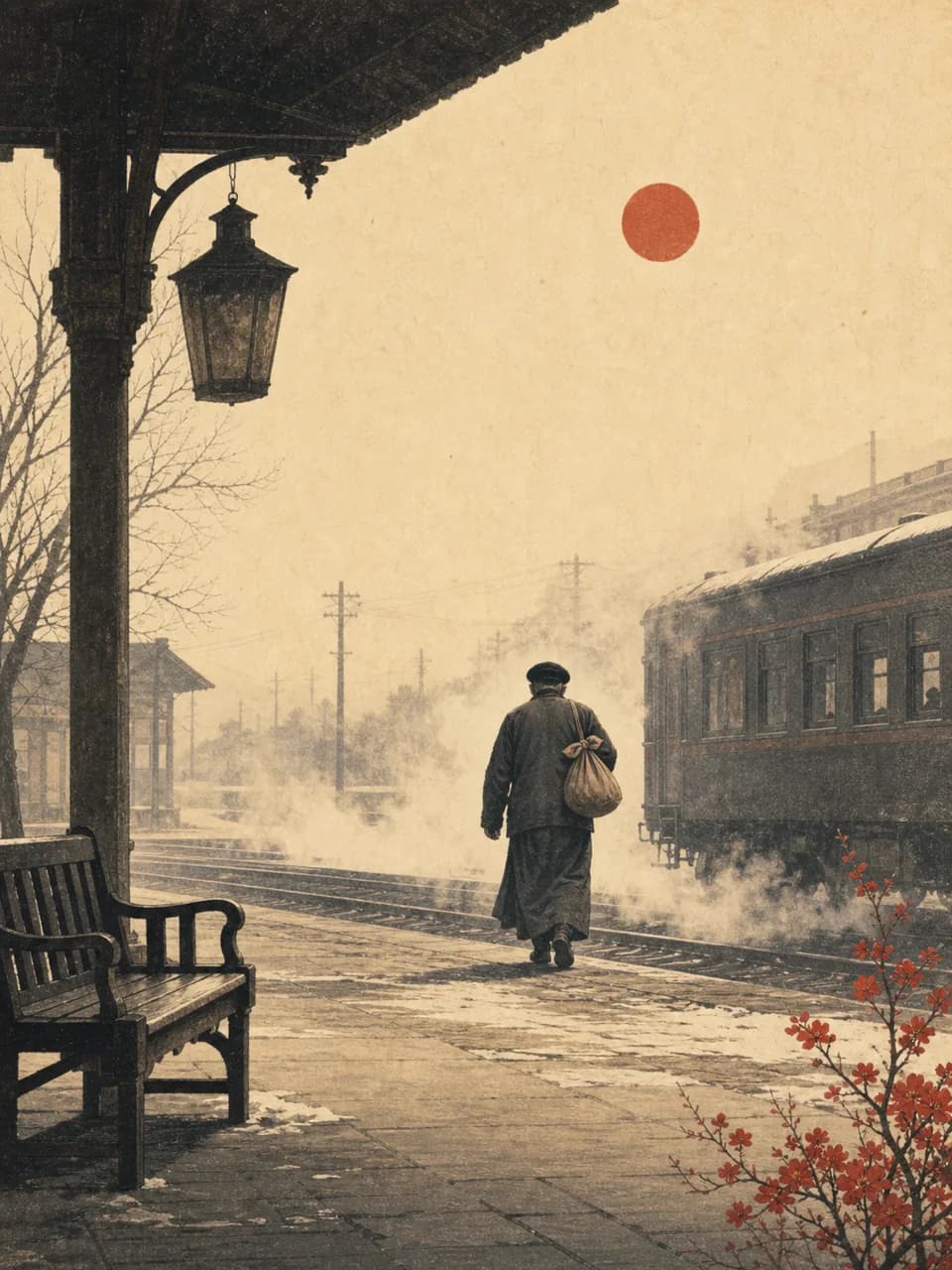
封面为 Hanyu365 原创生成式插画;页面文字由本站编辑性编写。 外部资料用于核对作品背景与版本线索,不代表外部机构为本站内容背书。