WHY THIS CLASSIC
为什么入选
文章以迁客骚人的悲喜为中段,以“古仁人”的公共责任为落点。景物、情绪与议论层层递进,是学习写景抒情、对举节奏和主旨转折的范本。
The essay moves from the joy and sorrow of displaced officials to a larger ethic of public responsibility. Its progression makes it a model for landscape writing, balanced rhythm, and thematic turns.
READING CONTEXT
阅读坐标
庆历年间,滕子京重修岳阳楼并请范仲淹作记。作者没有把文章写成一般的楼阁说明,而是把洞庭湖的阴晴变化、个人处境和士大夫的责任连接起来。
After Teng Zijing restored Yueyang Tower during the Qingli era, he invited Fan Zhongyan to write about it. Fan turned the commission into more than an architectural record, linking Dongting Lake’s changing weather with personal circumstance and public duty.
SOURCE TEXT
洞庭一湖,悲喜两境
One lake, two states of mind
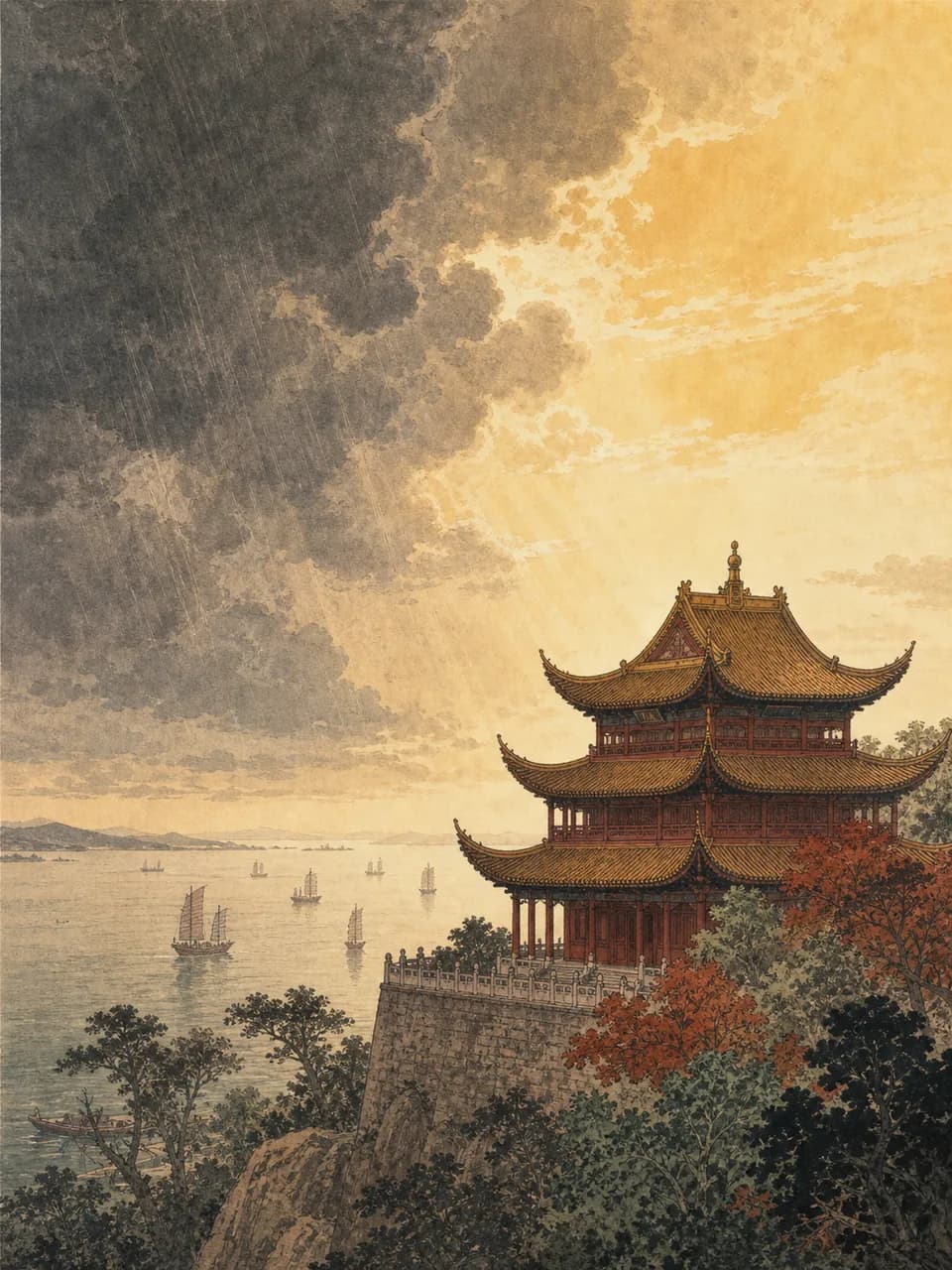
若夫霪雨霏霏,连月不开,阴风怒号,浊浪排空;日星隐曜,山岳潜形,商旅不行,樯倾楫摧。至若春和景明,波澜不惊,上下天光,一碧万顷;沙鸥翔集,锦鳞游泳,岸芷汀兰,郁郁青青。
When endless rain falls and the sky does not clear for months, fierce winds howl and turbid waves strike the heavens. Yet when spring is mild and sunlight bright, the water lies calm, sky and lake meet in a vast field of blue, gulls gather, fish swim, and fragrant plants grow green along the shore.
BILINGUAL CLOSE READING
洞庭一湖,悲喜两境
One lake, two states of mind
编辑说明
原典短读保留经过核对的文言片段;下方中英学习段落与写法提示均为本站原创,用于帮助理解景、情、理的推进关系。
The source section preserves a checked classical passage. The bilingual study passages and craft notes below are original Hanyu365 learning material.
中文 · 01
天气也是结构
阴雨段先压低并收窄读者的视线:天色昏暗,道路受阻,舟楫受损,能够自由活动的外部世界一步步缩小。风声、浪声和暮色相互叠加,使登楼者仿佛被困在眼前的愁景中。到了晴日段,文章又把空间重新打开,湖面、长空、飞鸟、游鱼和月影依次进入视野,人的呼吸也随之舒展。两组景物并非随意罗列的名胜清单,而是精心安排的情绪轨道。作者先让读者亲身经过一暗一明,才有基础追问:如果外界变化如此有力,人的内心是否只能被它牵着走?
写法提示:比较两段动词和空间范围,可以看见作者怎样用景物调度读者的呼吸与情绪。
English · 01
Weather becomes structure
The rainy passage first lowers and narrows the reader’s view. Light fades, roads are blocked, boats are damaged, and the world in which people can move freely contracts step by step. Wind, waves, and evening darkness accumulate until the visitor seems confined within the scene of sorrow. In the bright passage, the composition opens space again. Lake, distant sky, birds, fish, and moonlight enter the field of vision in sequence, and the reader’s breathing seems to expand with them. These two landscapes are not decorative lists of local sights. They form a carefully arranged track for emotional movement. Only after readers have passed through darkness and brightness in their own imagination can the essay ask its central question: if external change possesses such power, must the human mind always be carried wherever weather and circumstance lead?
Craft note: Compare the verbs and spatial range in the two scenes to see how landscape controls the reader’s breathing and emotion.
中文 · 02
先写他人的悲喜
登楼者面对阴沉风雨容易想到离乡、受谗与失意,面对澄澈春光又自然感到轻快满足。作者并不嘲笑这些悲喜,因为人会受环境触动,本就是可以理解的经验。他先把两种反应写得充分,再把思考向前推进:如果心情完全由个人得失和天气明暗决定,那么价值判断是否也会一同摇摆?顺境时愿意关心他人,逆境时便只顾自己,这样的责任仍然可靠吗?文章由写景进入议论,不是突然离开文学,而是把景物唤起的情绪当作思想实验,让读者看清自己通常怎样被外界牵动。
写法提示:议论没有突然降临,而是从读者已经体验过的两种情绪中自然生长出来。
English · 02
Beginning with other people’s feelings
Before a dark and stormy view, visitors may think of exile, slander, and personal disappointment. Before clear spring light, they naturally feel released and content. Fan Zhongyan does not mock these responses, because human feeling is understandably affected by surroundings. He renders both reactions fully before moving the inquiry further: if mood is governed entirely by private fortune and changing weather, will moral judgment sway with it as well? If a person cares for others only in favourable circumstances and turns inward whenever life becomes difficult, how dependable is that person’s responsibility? The essay’s movement from landscape to argument is therefore not a sudden departure from literature. It uses emotion produced by scenery as a thought experiment, allowing readers to recognize how easily their own attention and values can be directed by external conditions.
Craft note: The argument does not arrive abruptly; it grows from two emotions the reader has already experienced.
中文 · 03
把中心移向天下
结尾提出的境界并不要求人变得没有情感,而是重新安排情感与责任的先后。个人处境当然会带来悲喜,眼前景物也仍能打动人,但对公共生活的关切不能随着自己的升沉和天气的阴晴而消失。先忧并非永远沉重,而是把尚未得到安定的人放在判断之前;后乐也不是拒绝幸福,而是不急于让个人满足成为全部尺度。文章于是从一次登楼远眺,走向对“我为何行动”的更大回答。真正稳定的内在中心,不是隔绝世界,而是在变化中仍知道自己愿意为谁承担、应当把什么放在前面。
写法提示:名句有力量,不只因为对仗整齐,更因为它完成了从个人感受向公共伦理的转轴。
English · 03
Moving the center toward the wider world
The ideal proposed at the end does not require a person to become emotionless. It rearranges the order of feeling and responsibility. Personal circumstances will still bring sorrow and joy, and landscape will continue to move the observer, but concern for public life should not disappear whenever one’s career falls or the weather darkens. To worry first does not mean choosing permanent misery; it means allowing the insecurity of others to enter judgment before private comfort. To rejoice later does not reject happiness; it refuses to make individual satisfaction the only measure. A visit to a tower thus becomes a larger answer to the question, “Why should I act?” A stable inner centre is not built by withdrawing from the world, but by knowing, amid change, for whom one is willing to bear responsibility and what must be placed first.
Craft note: The famous conclusion gains force not only from balance, but from its pivot from private feeling to public ethics.
中文 · 04
一篇文章怎样从楼走向天下
全文的行进路线十分清楚,却不是简单分成写景和议论两块。文章先交代重修岳阳楼的缘起,让写作落在朋友、政事与地方变化之中;再把视线推向洞庭湖的广阔,随后用阴晴两景调动读者情绪;等读者亲自经历悲喜,作者才提出古仁人的不同选择。每一层都为下一层准备问题,因此结尾的公共关怀并非从空中落下。楼是起点,湖扩大空间,迁客骚人带入普通情感,古仁人则改变衡量情感的尺度。掌握这条路线,可以学习议论文章如何借叙事和景物逐步提高思想高度,而不是突然喊出一句宏大口号。
写法提示:梳理“缘起—大观—悲喜—古仁人”的推进链,能看见名篇结构如何为思想结论蓄力。
English · 04
How an essay moves from one tower toward the world
The essay follows a clear route, but it is not simply divided into a descriptive half and an argumentative half. It first explains why the tower was restored, placing the act of writing within friendship, public office, and local change. The view then expands toward Dongting Lake before two contrasting landscapes draw readers through sorrow and delight. Only after the audience has imaginatively experienced both emotions does Fan Zhongyan introduce the different orientation of the exemplary figures of the past. Each layer prepares the question required by the next, so the final concern for the wider world does not descend without support. The tower provides a starting point, the lake enlarges space, ordinary visitors introduce recognizable feeling, and the ancient ideal changes the scale by which feeling is judged. This route demonstrates how an argumentative essay can rise through narrative and landscape rather than announce a grand slogan without preparation.
Craft note: Tracing the chain from occasion to panorama, emotion, and ethical ideal reveals how structure earns the conclusion.
中文 · 05
受托写记也是朋友间的责任
《岳阳楼记》并非作者登楼后即时写下的游记,而是一篇受友人之托完成的“记”。这个写作关系值得注意:滕子京在处境不顺时仍治理地方、重修名楼,范仲淹则用文章回应朋友的政绩与心境。朋友之间的支持不是简单安慰,也包含提醒和共同勉励。作者赞许重建带来的新气象,却没有让文章停在歌功颂德,而把眼光推向更稳定的责任原则。这样一来,写作既记录一座楼,也为两位身处仕途起伏的人建立相互确认的精神坐标。结尾那句寻找同道的感叹,因而不只是孤高姿态,也是一封面向朋友与后世的邀请。
写法提示:补回受托写作的交往背景,使公共名句同时带有朋友之间回应、提醒与相互扶持的温度。
English · 05
Writing the record is also a responsibility between friends
The Record of Yueyang Tower is not an immediate travel diary written after Fan Zhongyan personally climbed the building. It is a record composed at a friend’s request. That relationship matters. Teng Zijing continued to govern his region and restore the tower while facing political difficulty, and Fan responded by giving literary form to both the achievement and the state of mind surrounding it. Support between friends is not reduced to comfort; it includes reminder and mutual encouragement. The writer praises renewal without allowing the essay to stop at celebration. He directs attention toward a more stable principle of responsibility that can survive changes in office and fortune. Writing thus records a building while establishing a shared spiritual coordinate for two people navigating public life. The closing search for a companion is not merely a gesture of proud solitude, but an invitation addressed to a friend and to later readers.
Craft note: Restoring the commissioned context gives the public maxim the warmth of response, reminder, and friendship.
LANGUAGE FOCUS
关键词语
浩浩汤汤
hào hào shāng shāng
水势盛大、无边无际的样子。
vast and surging, used of an immense body of water
浩浩汤汤写出洞庭湖铺展到视野尽头的气势。
The phrase presents Dongting Lake as immense water stretching beyond the field of view.
迁客
qiān kè
被贬谪或调任到远方的官员。
an official exiled or transferred far from court
迁客的处境使登楼之景天然带有身世之感。
The displaced official’s situation gives the tower view a personal undertone.
宠辱偕忘
chǒng rǔ xié wàng
把受到恩宠或屈辱都暂时放下。
to set aside both favor and humiliation
宠辱偕忘不是麻木,而是把个人得失放到更大的尺度中。
Setting aside favor and humiliation is not numbness but a change of scale beyond private gain.
先忧后乐
xiān yōu hòu lè
先为天下担忧,后享个人安乐。
to place public concern before personal enjoyment
先忧后乐把文章的抒情终点转化为责任的起点。
Putting concern before enjoyment turns the essay’s emotional ending into the beginning of responsibility.
DISCUSSION
读后思考
- 01
阴景与晴景分别使用了哪些动词?这些动词怎样改变阅读速度?
Which verbs shape the dark and bright scenes, and how do they change the reading pace?
- 02
“不以物喜,不以己悲”是否意味着不应有个人情感?请结合全文解释。
Does refusing to be ruled by external things mean rejecting personal emotion? Explain from the whole essay.
- 03
今天的公共生活中,什么情境仍需要“先忧后乐”的责任次序?
What situations in public life today still require responsibility to come before personal comfort?
SOURCES & EDITIONS
资料与版本说明
- 1. 岳阳楼记卷
The Palace Museum · 核对 2026-07-24
- 2. 范仲淹
Yueyang Municipal People’s Government · 核对 2026-07-24
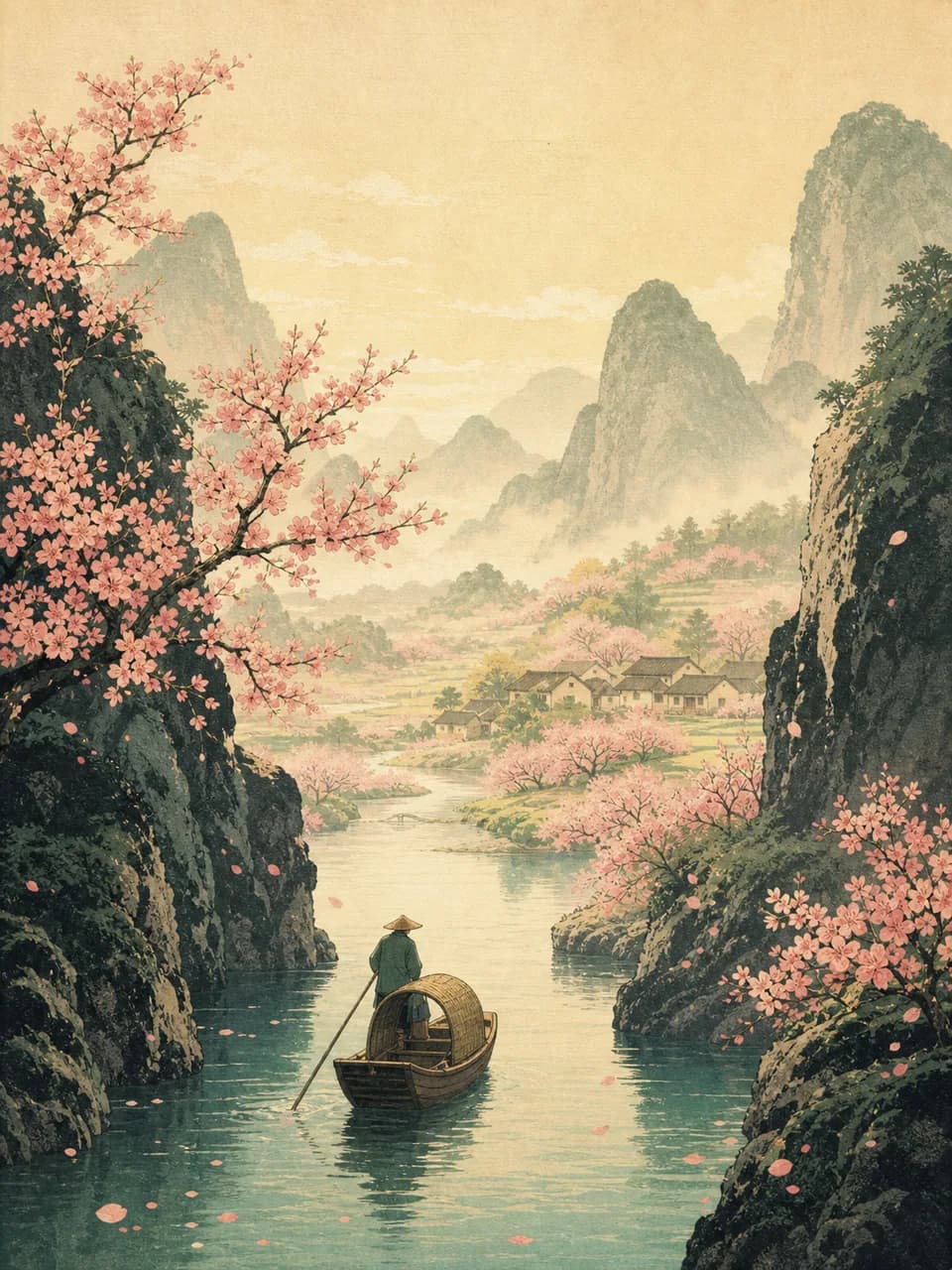
封面为 Hanyu365 原创生成式插画;页面文字由本站编辑性编写。 外部资料用于核对作品背景与版本线索,不代表外部机构为本站内容背书。